Kinshasa → Muanda stress-free
Set off from Kinshasa and reach Muanda stress-free with a ready-made 8-day itinerary, designed for the diaspora and families. Logistics, stops, breaks and driving times: everything is optimised so you can enjoy it without getting bogged down in planning.
Our itinerary in a nutshell:
• Kin → Kisantu → Mbanza-Ngungu → Matadi/Boma → Muanda, with early starts to avoid road hassles (the N1 and the jams getting out of Kinshasa).
• The must-sees: Kisantu botanical garden, the Mbanza-Ngungu caves, Boma, the beaches of Muanda and Banana.
• A day not to miss: the Mangroves Marine Park and the shell islands (picnic on an island).
• A "gentle adventure" return: Kimpese → Zongo, with the Étaka Bush Camp option (natural pool).
• Overnight and meal stops planned so the family can keep up the pace, without rushing around.
Everything is based on 5 to 6 people (2 to 3 adults and 3 kids), with a driver.
What budget should you plan?
| Budget version | ≈ 2 000 $ |
| Standard version | ≈ 3 000 $ |
| Comfort version | ≈ 4 000 $ |
| Our actual trip (6 people, premium version) | $6,000 to $7,000 |
For 5 to 6 people with a driver, excluding flights. There were 6 of us and we went premium, for example the VIP lodge at N’sele: none of it is essential. You can bring the costs down a lot, and the guide shows you where.
Day 1
Kinshasa → Kisantu (botanical garden) → Mbanza-Ngungu
The essentials in 30 seconds
A very early start from Kinshasa to beat the Kin Ouest traffic, with an unmissable stop at Kisantu botanical garden, then a short hop to Mbanza-Ngungu to sleep and recover.
Before you leave (the day before)
- The driver (crucial): before a family journey like this, try your driver out on a few short trips in Kinshasa. That's what we did to see how careful and patient he was, and above all how he was with the kids (kindness, alertness, protective reflexes).
- An important cultural point: in the DRC, when you eat, drink or sleep, you often provide "the same" for the driver (meal, drink, sometimes a room). It avoids awkwardness and helps keep good team spirit.
- To agree before leaving: total price, vehicle capacity (number of seats), ground clearance (useful depending on roads and season), four-wheel drive or not.
Itinerary & driving times
- Kinshasa → Kisantu (botanical garden): about 120 km, allow 3 to 4.5 hours depending on traffic (getting out of Kin can be very slow).
- Avoid driving at night as much as possible (fatigue, visibility, the unexpected).
What to pack
- Plenty of water and snacks for the kids: breaks don't always come "at the right time".
Our driver
For the provider, I'd chosen an agency with a range of vehicles and reliable drivers, and we really hit it off with our driver. My son loved welcoming him when he came to pick us up and chatting with him!
The driver is much more than someone behind the wheel: he's also responsible for your safety. He handled all the checkpoints, haggled at the Muanda market (with our European faces…), looked out for us and decoded the local ways for us. An essential link.
Unmissable stop: Kisantu botanical garden
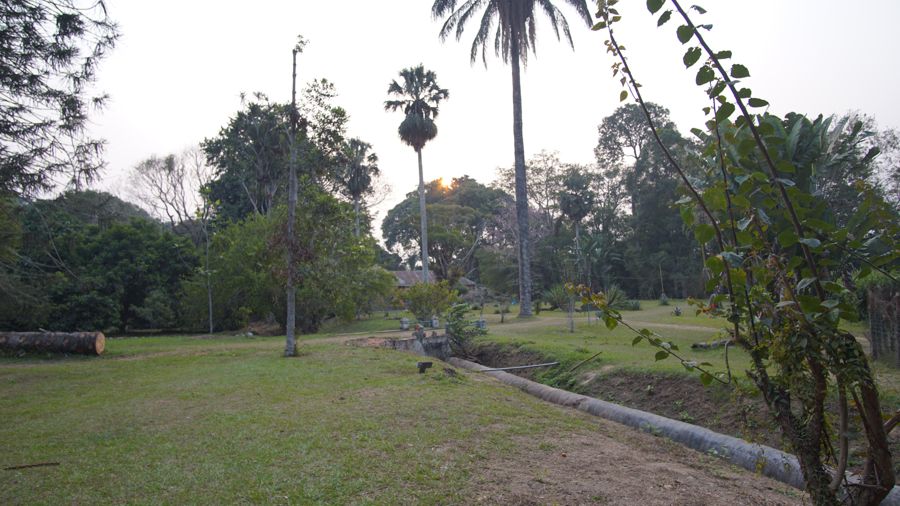
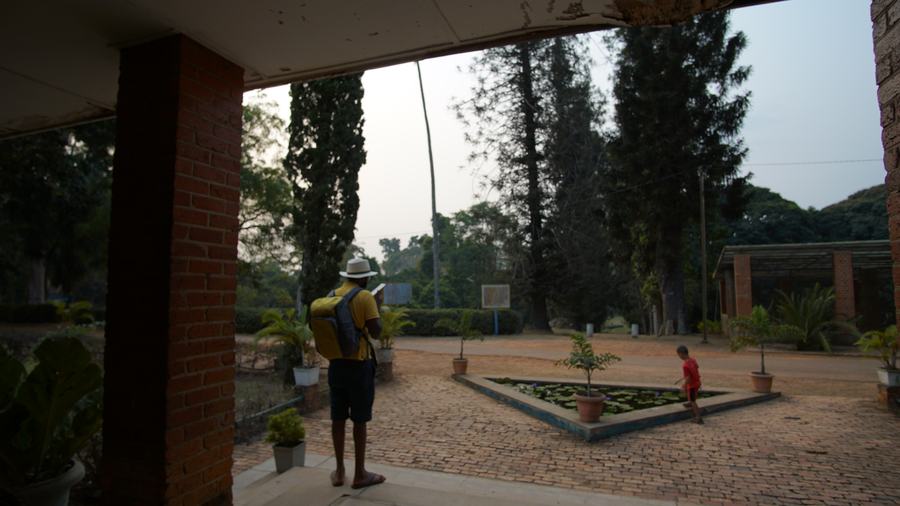
Kisantu botanical garden was created in 1900. Originally, the site was used to acclimatise plants, develop useful crops and document the flora. It was set up on a fertile plain near the Inkisi, with a very "engineering" approach (water management, canals, irrigation).
The site had a scientific golden age in the late 1950s, then harder years, before being restored in the mid-2000s. Today it's a large garden of about 220 hectares with thousands of species: you quickly see why it's an unmissable stop on this route.
Thanks to my planning, the 8 of us had the visit, buffet and drinks for $120, with a varied, well-thought-out meal. The visit takes about 1h30. I even managed to get some drone shots (allowed on site with local permission).
Overnight stop: Mbanza-Ngungu
After the meal, we drove for about an hour in the dark, and I don't recommend it! The driver found us a guesthouse in Mbanza-Ngungu: basic, but exactly what we needed to sleep (about $10 a room). And then… a surprise wake-up around 3 am from a church choir: welcome to the DRC!
Watch out for
- An early start = the key (otherwise you lose the day in traffic jams).
- Avoid driving at night as much as possible.
- Kids: water + food = a guaranteed "anti-meltdown plan".
Day 2
Mbanza-Ngungu caves + Kwilu-Ngongo (sugar works)
The essentials in 30 seconds
An "authentic Central Congo" day: caves and nature, then immersion in Kwilu-Ngongo (sugar cane in the air, the guest house paths) and a night there to catch your breath.
Before you leave (the day before)
- Sort out the timing with the driver: an easy morning, then the road to Kwilu-Ngongo.
- Important: these visits go well when you're announced and expected (otherwise you waste time, or can't get into certain areas).
Itinerary & driving times
- Morning: Mbanza-Ngungu → the caves (1h30 to 2-hour visit).
- Midday: set off for Kwilu-Ngongo.
- Late afternoon: settle in, stroll around the guest house, and maybe a tour of the sugar works and rum distillery (depending on access that day).
- Evening: a quiet meal and bed on site.
What to pack
- Just the essentials: water, a snack for the kids, a cap and mosquito repellent.
Unmissable stop
The caves: a cool atmosphere, sculpted rock… and the famous blind cave fish (Caecobarbus geertsii).
Kwilu-Ngongo: the smell of sugar cane and the sugar company setting. The Compagnie sucrière de Kwilu-Ngongo is an old agro-industrial site (sugar works and distillery) founded in 1925, directly linked to Kwilu rum.
A little treat to finish: chewing a piece of sugar cane (the kids love it).
Overnight stop: Kwilu-Ngongo
A night on site to keep a "family" pace, without rushing, and enjoy the peace and quiet.
Watch out for
- Without connections or contacts, you may run into closed doors or a "cut-price" visit.
- Don't promise your family "we'll see everything": access varies (day, who you're dealing with, weather, logistics).
- Bonus option, if you're well accompanied: small caves around Kwilu-Ngongo, including one where you can swim (check the season and safety on site).
Day 3
Kwilu-Ngongo → Matadi → Boma → Muanda (Nsiamfumu)
The essentials in 30 seconds
The Kongo Central road trip continues (a big driving day): leave around 6 am, through Matadi (the area with the most lorries), lunch break in Boma (landmark: the Yema restaurant), then the most beautiful stretch: Boma → Muanda, lush and with more and more of an "ocean air" feel. The goal: arrive before dark so you can enjoy the beach in the afternoon.
Before you leave (the day before)
- Confirm with the driver: an early start, short but regular breaks (especially with the kids).
- If your kids are used to milk: think powdered milk such as Nido (in the DRC, milk isn't necessarily a "kids' breakfast" staple everywhere).
- Leave some slack: this is the day you might hit an unexpected jam (accident, broken-down lorry…).
Itinerary & driving times
- Kwilu-Ngongo → Matadi: about 4 hours
- Matadi → Boma: about 3 hours
- Boma → Muanda: about 2 hours
- Muanda → Nsiamfumu: 20 to 30 min
- With breaks, allow about 10 hours for the day: leave around 6 am to arrive around 4 pm.
What to pack
- A little "buffer" cash for surprises on the road
- Water and snacks for the kids (always)
- Powdered milk if needed
Unmissable stop (and real on-the-ground info)
1) Kwilu-Ngongo → Matadi, the most "risky" stretch (but not necessarily the most dangerous for you). What makes this stretch tense isn't that you'll get attacked: it's mostly the sheer volume of traffic. Matadi being a major logistics, strategic and commercial hub, you pass a lot of big lorries, sometimes old, often heavily loaded. The jams come mostly from incidents (a stranded lorry, an accident, an unstable load) rather than the state of the road.
2) Matadi, the paradise of "bilokos". Matadi is known for its bilokos sellers (imported goods, odds and ends, good and not-so-good deals): it's lively, busy, full of horns, loading and unloading.
3) Going through Matadi (DGM, immigration). There's a checkpoint that can be stressful (paperwork, varying moods). I'm only mentioning it so you're not caught off guard: how to get through it without losing hours is in the guide.
In Matadi, you cross the legendary Maréchal bridge, a 722-metre suspension bridge built between 1979 and 1983 with help from Japan. It spans the Congo River at a strategic point and was long a symbol of friendship between the DRC and Japan.
Video with sound: press play.
4) Lunch break in Boma: the Yema restaurant (with a pool). A good family landmark: a clean, pleasant restaurant where you can catch your breath (and the kids love seeing the pool). Perfect for breaking the day in two.
5) Boma → Muanda, the most beautiful stretch. This is the "breathing space" part: smoother road, more nature, more trees… and you start to smell the ocean air. Honestly, it's the stretch that puts a smile back on your face after Matadi.
Overnight stop: Nsiamfumu, by the ocean
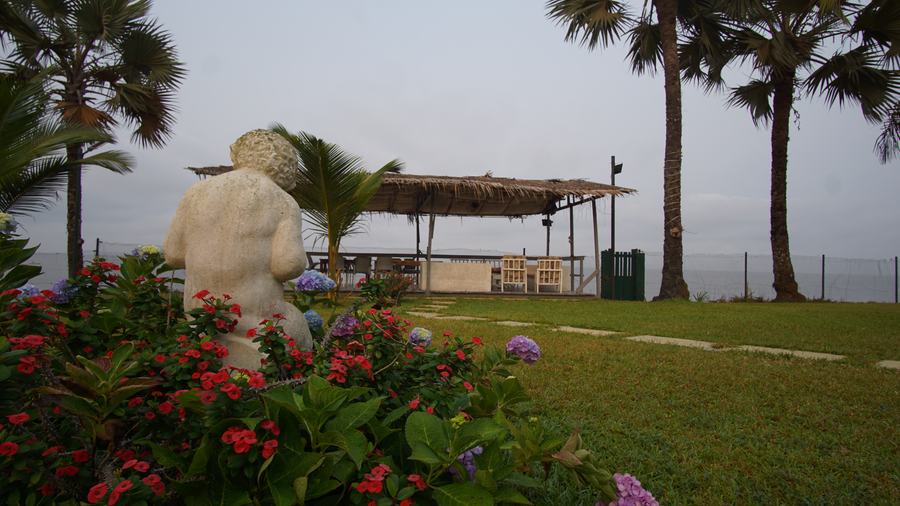
You arrive in the late afternoon: drop the bags and… you're already facing the Atlantic. If the sea is calm, it's the perfect time for a first swim (and for the kids, an instant memory). If it's rough: stay out! There's no flag and no lifeguard.
Watch out for
- Leave early, otherwise you lose your head start and arrive after dark.
- Matadi = traffic and lorries: calm driving, careful overtaking, regular breaks.
- Don't "over-promise": the day can be long, so protect the kids' rhythm.
Day 4
Mangroves Marine Park + shell islands
The highlight day, the one that stays with you for a long time.
The essentials in 30 seconds
Sometimes one day outshines all the others. In Kongo Central, for us, it's the Mangroves Marine Park.
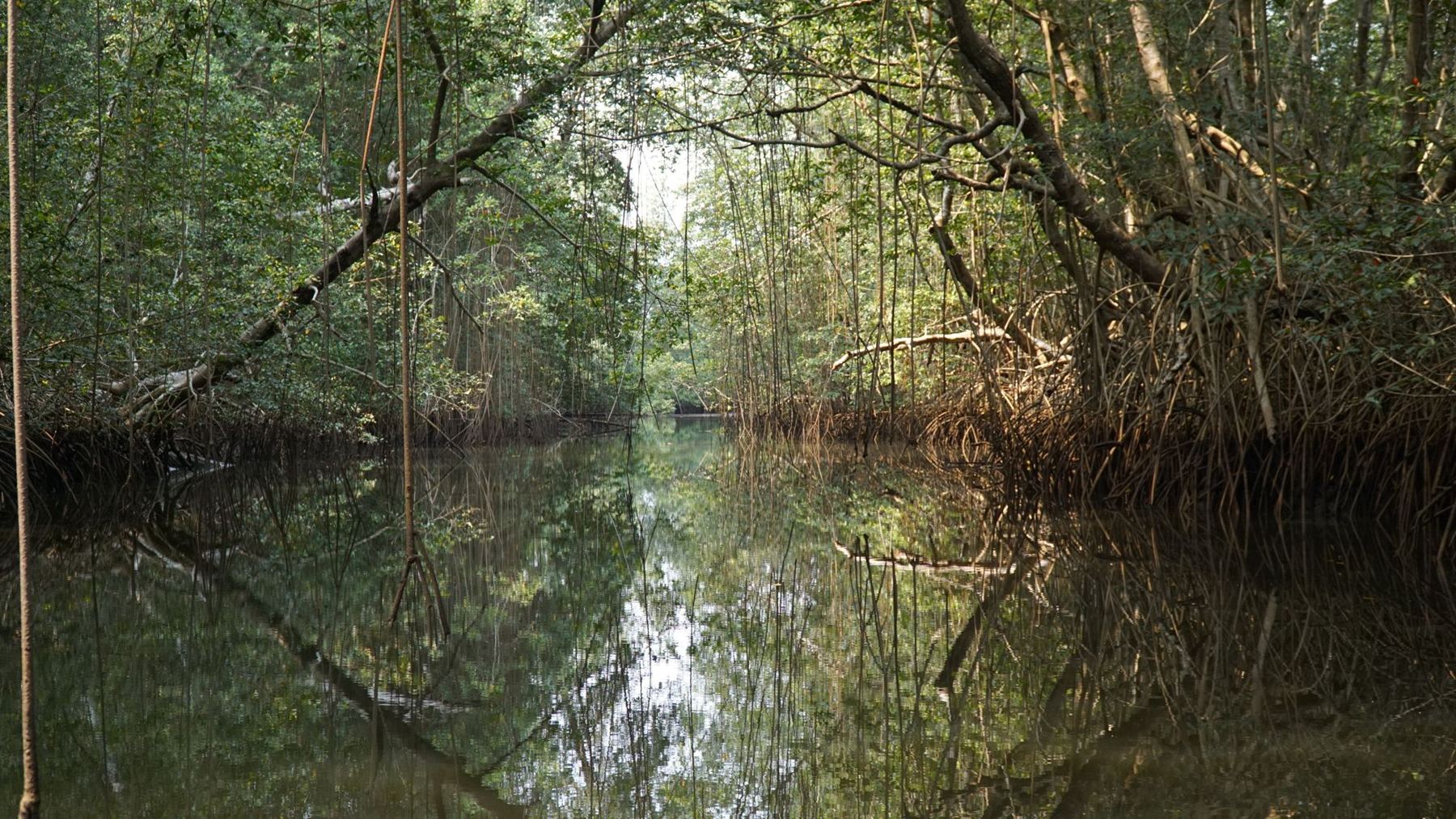
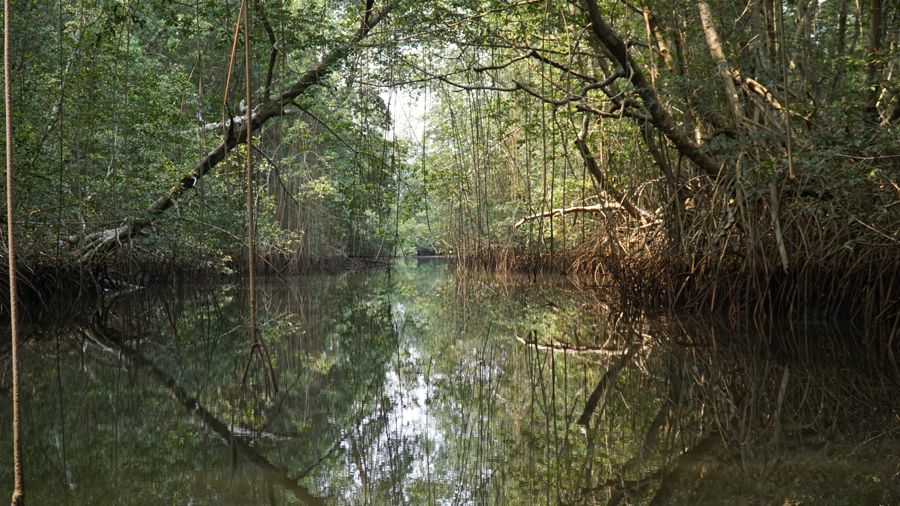
We climb aboard… and suddenly, silence. The mangrove trees close in, the water turns into a mirror, nature speaks. The kids don't even shout any more (one of my daughters cried for the first few moments in the boat because she was scared, then calmed down on her own seeing this incredible nature): they watch, they whisper, they look for monkeys in the lianas.
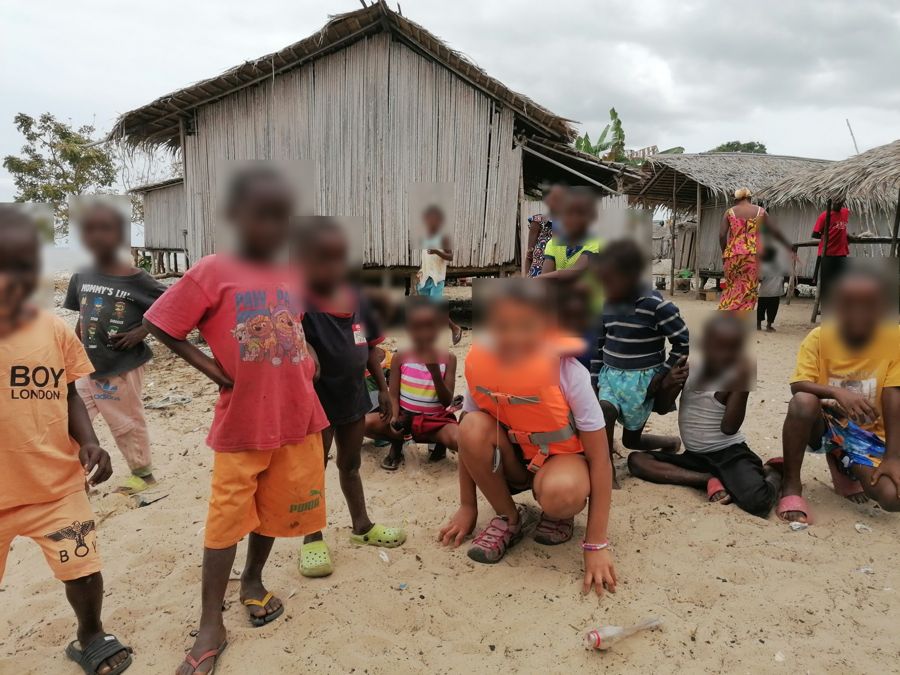
Then we land on inhabited islets. Kids run up to ours and they play together as if we'd always known each other. We have lunch there, at the end of the world, feeling privileged. And this crazy detail: the ground… shells everywhere. Local bread from a wood-fired oven, local prawns, simple smiles. Honestly, a day like this anywhere else… would cost a fortune.
Before you leave (the day before)
- No mangroves at night: aim for a trip that starts in the late morning (often around 10 am, depending on how it's organised).
- As a family: life jackets, safety briefing, and set your limits (for example: a route avoiding hippo areas). The park is home to hippos, crocodiles, monkeys, snakes…
- Pack a picnic (simple, but it makes all the difference).
Itinerary & driving times
- Leave Nsiamfumu → boarding point (Muanda or Banana depending on the arrangements).
- Boat trip through the mangroves: 1h30 to 2 hours (family pace).
- Landing on an islet: meeting people, a stroll, lunch.
- Back by a more direct route: the goal is to be home before dark.
What to pack
- A small dry bag (phones)
- Water and snacks for the kids
- Picnic
- Cap and sun protection
Mangroves that take your breath away
You know what surprises you most, especially coming from Europe? The moment you leave the last inhabited area and, all of a sudden… the world goes quiet.
The boat slows down, the mangrove trees close in around you like a green tunnel, the water turns into a mirror, and all you can hear is nature: a bird calling in the distance, a rustle in the lianas, a branch moving… The kids go quiet on their own, not because they're told to, but because they sense that "something is happening here". You're not in a landscaped park: you're in a real living ecosystem, protected and vast.
And the effect on the kids: they scan the vines for monkeys, ask a thousand questions, and marvel at a passing fisherman, a diving bird, a ripple in the water. It’s a day that makes deep-rooted memories, the kind that resurface months later.
The shell islands: emotion and people
Then you land. And there’s the second surprise: life. Families live on these islets. Kids run barefoot, women are busy, fishermen come home, people greet you, talk to you, show you around.
Unlike some tourist spots where everything is a transaction, here it’s simpler: the kids just want to play with yours. They touch, they laugh, they run, they invite them into the game. My son even started playing with a local boy: that kind of moment is worth all the gold in the world, because it’s spontaneous.
And then there’s the detail that makes the place almost unreal: you’re walking and you realise the ground is made of shells. Everywhere. As if the island had been built by time, the sea and shared meals.
We get out the picnic, someone lends us a table, we chat, visit a small health centre, greet the customary chief, take photos… and you think: “How can this place be so little known?”
The little foodie bonus
Local bread from a wood-fired oven: simple, nothing fancy, but excellent. And the prawns we bought on the spot to have cooked that evening… that’s exactly what I love: you live the day, you bring back a taste, and in the evening you make the experience last.
Video with sound: press play.
Video with sound: press play.
Overnight stop: Nsiamfumu
Back to Nsiamfumu (2nd night). You come home tired but happy, and you have a rare luxury: a house on the Atlantic, peace and quiet, and the feeling of having lived an exceptional day.
With breathtaking wildlife and plants and genuine human generosity, the Democratic Republic of the Congo has the most beautiful nature in the world!
Watch out for
- We head back before dark.
- Wildlife safety: hippos are a real danger. Ask for the hippo-free route!
- Life jackets and safety briefing before boarding.
The complete guide
All the prices, times and addresses for this trip
The €29 guide covers each day in detail: map, prices, times, accommodation with photos, checklists and plan Bs. The €89 offer adds the contacts of our driver and our hosts.
Day 5
“Easy-going” Muanda & Banana: market, beach, local culture
The essentials in 30 seconds
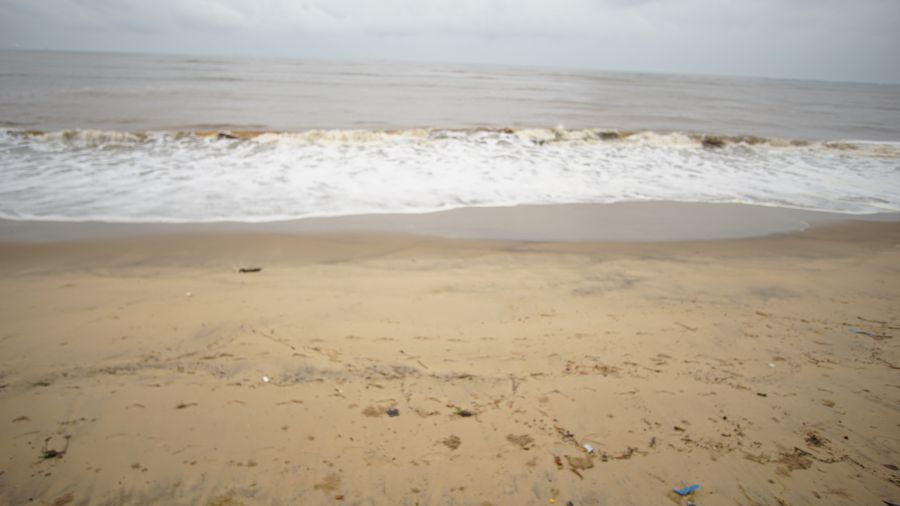
After the sensational mangrove day, we take a breather. Day 5 is simple luxury: a slow wake-up facing the Atlantic, a little stroll through the village, an ultra-fresh fish market, then the beach in Muanda or the point at Banana to see (and understand) where the Congo River meets the ocean. A perfect day to recharge the batteries before the big drive on day 6.
Before you leave (the day before)
- Choose the pace: “full chill at the house” or “market + Banana + beach”.
- If you plan to buy fish or prawns: bring a cool box if you can (otherwise, cook it the same day).
- Keep in mind that day 6 is long: today, don’t wear yourselves out.
Itinerary & driving times
- Option A, total chill: house, garden and ocean in the morning; swimming, games and a nap in the afternoon; a quiet dinner.
- Option B, market + home cooking: Muanda market in the morning (fish, prawns, shellfish), then have what you picked cooked at the house.
- Option C, Banana: the point and the estuary in the morning, beach in the afternoon.
What to pack
- Sandals or water shoes for Banana
- Water and a cap
- A bit of cash for the market
The morning walk in Nsiamfumu
If you like to keep moving, a short walk or a jog through the village is perfect. And you might stumble on some really joyful scenes: we came across a Kimbanguist procession with a brass band, very festive, beautiful to watch. The kind of moment you can’t make up, and that’s part of the trip too.
Banana: understanding the Congo estuary
In Banana, you’re literally at the meeting point between one of the world’s most powerful rivers and the Atlantic. The river forms an estuary; Banana sits on a creek sheltered from the ocean by a spit of sand. The Congo’s fresh water pushes out to sea: you often see an area where the water changes colour, currents, a very particular river-sea mix depending on the season and the tide. A rare place on the planet.
Muanda market, fish paradise
The market is abundance: ultra-fresh fish, prawns and loads of seafood at local prices. We picked whatever looked good (fish, fruit), then went home to have it cooked. For a few dollars, local ladies cooked for us. The result: in the evening, we just sat down and ate.
Video with sound: press play.
Overnight stop: Nsiamfumu
Last night in Nsiamfumu: the perfect day to enjoy the house and garden and recharge everyone before the early start the next day.
Watch out for
- Don’t overfill the day: day 6 is a big drive.
- Beach and ocean: adapt to the state of the sea.
- Market: if you buy a lot, try to eat it the same day.
- Diaspora & investment: lots of people come to Muanda with the idea of buying a spot by the ocean. I have a local contact who can help you find available plots (included in the €89 offer).
Day 6
Muanda → Kimpese: the drive back + Kongo Central’s “giant market”
The essentials in 30 seconds
This is the long climb back inland. The goal: leave early, avoid driving at night, and reach Kimpese (or even Mbanza-Ngungu if all goes well). The unexpected bonus: as you approach Kimpese, you cross a hugely agricultural area where you can stock up on fruit, vegetables and sugar cane at prices Kinshasa can’t beat.
Before you leave (the day before)
- Vehicle check: while you were enjoying the previous days, the driver does his inspection (tyres, fluids, general condition). On this road, it’s not a luxury, it’s common sense.
- Kids’ plan: bring food for the road (breakfast and snacks). On a long day, the kids’ mood often comes down to a bottle of water and something to nibble.
- The golden rule stays the same: no driving at night.
Itinerary & driving times
- Early departure from Nsiamfumu.
- Drive back to Kimpese, or Mbanza-Ngungu if the road is clear.
- Delays are mainly caused by lorry accidents, overloaded vehicles and goods traffic between Matadi, Boma and Kinshasa.
- Simple goal: be settled in before 6 pm.
What to pack
- “Buffer” cash for the unexpected
- Water and snacks (always)
- A small, easy-to-reach “road” bag: wipes, biscuits, charger
Today’s surprise: the farm road
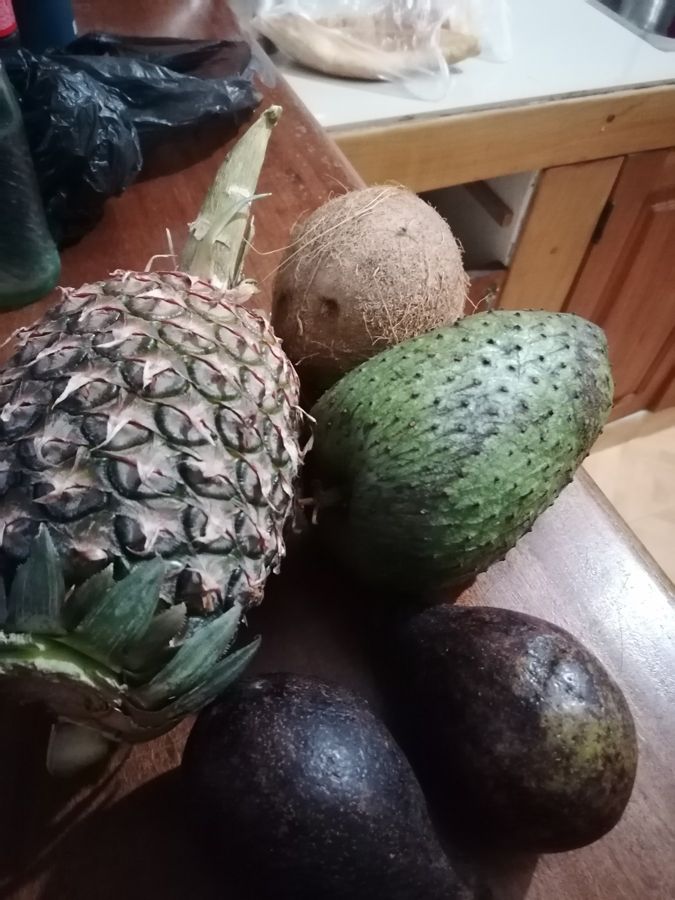
At some point, before and around Kimpese, you feel you’re entering a very agricultural Kongo Central. In practice, it’s a festival! The mums come up to the windows with their basins, and you’ve got everything: coconuts, plantains, cassava leaves (pondu), cassava, tomatoes, aubergines, carrots, lettuce, leeks, peanuts, matembele, squash, mbika… and sugar cane, a guaranteed hit with the kids.
In Kinshasa, you pay for the transport; here, you buy where it grows. If you’ve got a boot, now’s the time to make the most of it.
My 100% Kongo Central infused rum
I’d brought a 2-litre glass jar from Paris (yes, the proper serious-looking jar). Since the kids each had 23 kg + 10 kg of luggage allowance, we had room for this kind of “useful souvenir”.
In Kwilu-Ngongo, I’d already picked up some local white rum. Then, in this farming area just before Kimpese, we came across gorgeous fruit at local prices: coconut, bananas, pineapple… impossible to resist. We put it all in the jar: the rum, chunks of coconut, banana slices, fragrant pineapple… and to sweeten it, no industrial sugar: pieces of sugar cane.
The result: a natural, local, handmade infused rum that smells of the trip before you’ve even tasted it. You open it and you’re instantly back on the N1, among the fruit stalls, with the kids chewing sugar cane in the back and the Atlantic still on your mind.
Overnight stop: Kimpese
The aim is a simple guesthouse ($15 to $20 a room, no breakfast), just enough to settle in, sleep early and set off fresh the next day.
Watch out for
- Lorry route: this is the logistics artery to Kinshasa, so expect possible jams (accidents, breakdowns, overloading).
- Checkpoints: even if the way out went smoothly, the way back can be different.
- Stick to the plan: arrive before dark.
Day 7
Kimpese → Kisantu → Zongo: a tough track, spectacular falls
The essentials in 30 seconds
Early start, big “adventure” day: the road to Kisantu, then 56 km of very slow, bone-rattling track to Zongo. On arrival, you drop your bags at the Zongo complex (bungalows, tents, restaurant, straw huts, pool), then head down to the falls with the team’s help. And then… wow: powerful, impressive falls, the kind of scenery that makes you forget the 6 hours of track.
Before you leave (the day before)
- Car: high clearance recommended, tyres in good condition, spare wheel and puncture kit.
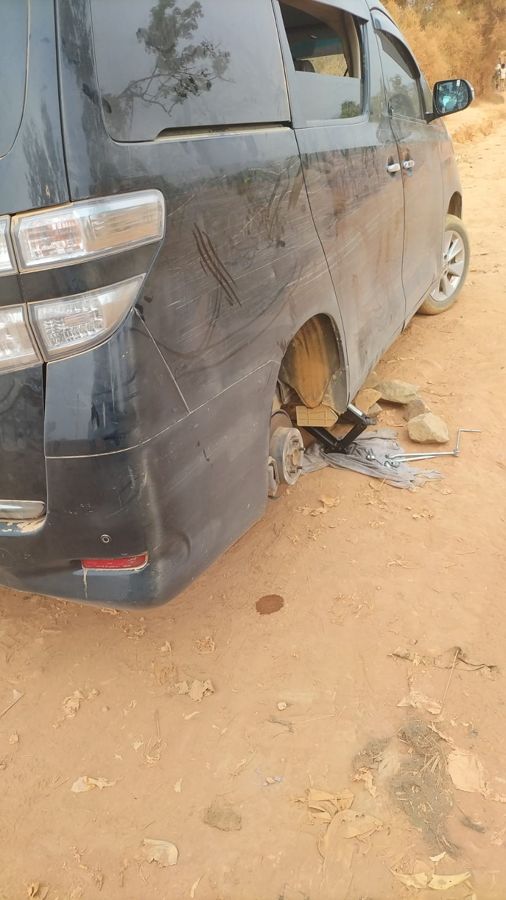
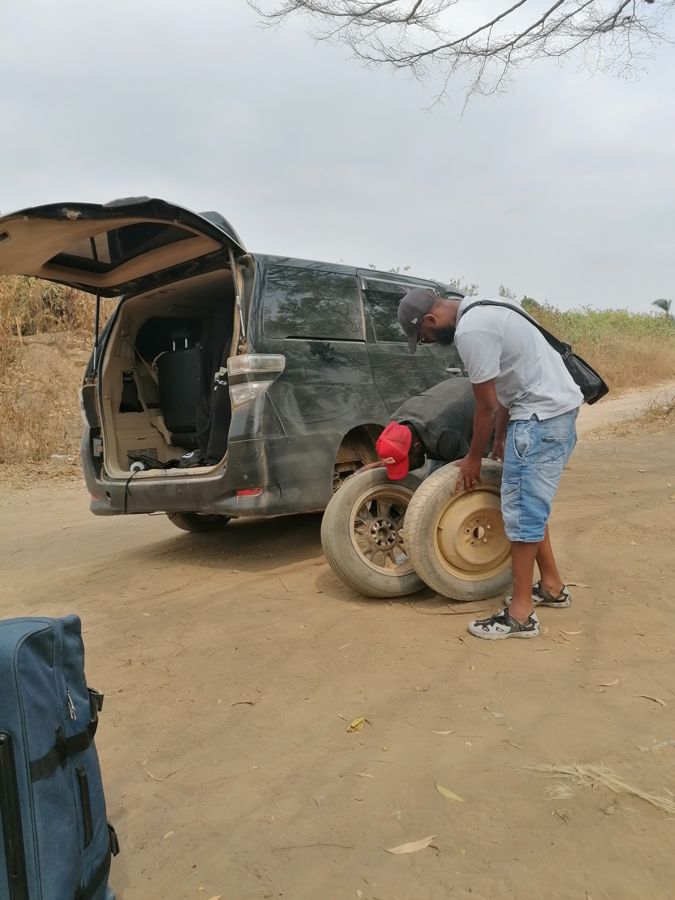
- Check that the driver can handle a puncture: we had 2 on the way back, it happens. With our driver, sorted in 10 minutes flat!
- Prepare the kids: it’s a long day, so water, snacks and short breaks.
- If you’re filming: drone charged and protected (the humidity at the falls is a real issue).
Itinerary & driving times
- Kimpese → Kisantu: about 1h30 to 2 hours
- Kisantu → Zongo: 56 km of track; the first few kilometres can be done at 10 km/h, it’s that damaged
- Real-life example: 6 hours for 56 km in a Toyota Noah
- Goal: arrive in broad daylight (ideally around 2 pm) to enjoy the site and the falls
What to pack
- Shoes with good grip (the way down to the falls: rocks, stones)
- Water and snacks for the kids
- Armbands or life jackets for non-swimmers
On the track
Along the way, there are a few small villages beside the track. During one of our punctures, some kids helped us by bringing water, because we had nothing to wash our hands with.
Must-see stop: the Zongo Falls (and the “adventure” descent)
The complex is the only way in: you enter the site (accommodation, restaurant, big grounds), then the team takes you down to the falls. With kids, that’s invaluable: the descent is rough and rocky, and their help makes all the difference.
And once you’re at the bottom… it’s a shock. Real falls: powerful, wide, loud, misty, impressive. The kind of place where you feel tiny and the kids are left speechless.
Drone: watch out for humidity and spray. Fly higher, keep a margin, and don’t get too close to the curtain of water.
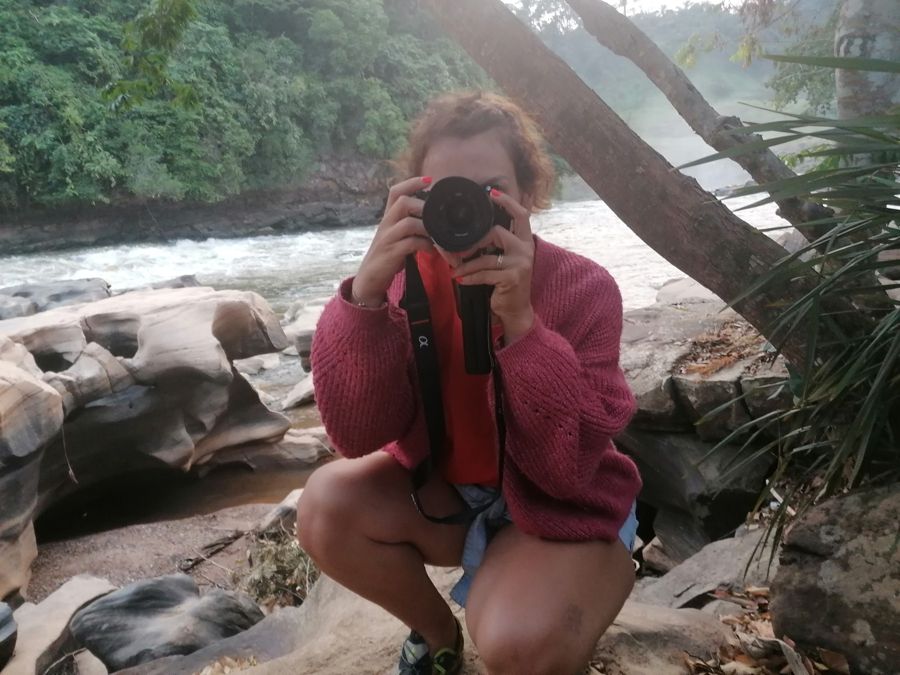
Overnight stop: the Zongo complex
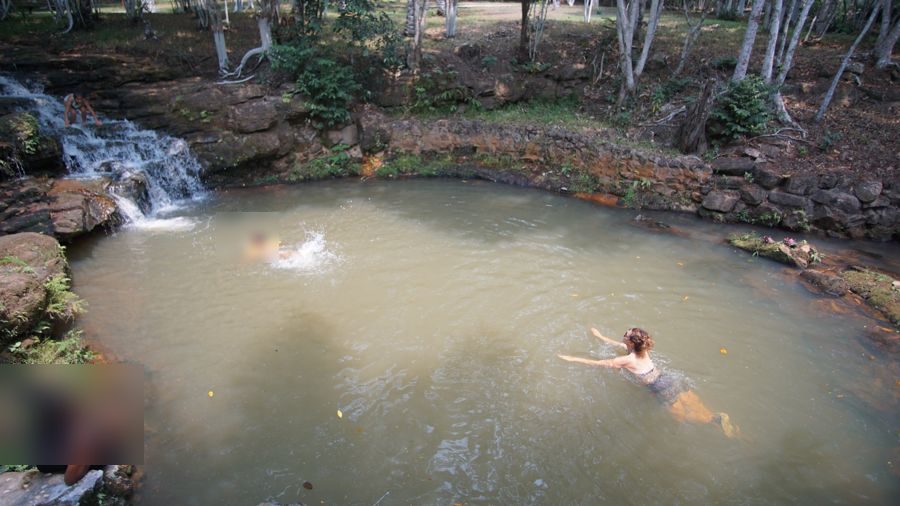
After the falls, you climb back up, eat, breathe. The place is really pleasant: straw huts to sit in, a natural setting, and a pool, the jackpot for the kids at the end of the day after such a long track.
Food-wise, a really nice surprise: varied, generous cooking (pondu, madesu, bitekuteku, fufu, rice, fish, meat, chicken… and fish cooked in leaves, liboke). In the evening: pool, photos, chilling… then bed.
Watch out for
- The track is the real challenge, more than safety: possible punctures, slow progress, fatigue.
- Arrive in daylight: essential (track, checking in, going down to the falls).
- Going down to the falls: hands free, proper shoes, kids accompanied.
Day 8
Étaka or the Massage Falls + back to Kinshasa
The essentials in 30 seconds
Last day: a big drive, so wake up with no pressure but a clear goal: avoid driving at night and allow for the traffic jams coming into Kinshasa (sometimes 3 hours if you’re going all the way to the city centre). The smart plan: start the day with 1 to 2 hours of relaxing at Étaka (natural pool) or the Massage Falls, then head back, check out, and go straight on: track → Kisantu → Kinshasa.
Before you leave (the day before)
- Plan the “road pack”: water, snacks and a meal plan.
- If you choose Étaka or the Massage Falls: armbands are a must for kids who can’t swim.
- The Zongo – Kisantu track can be rough: check the tyres, spare wheel and puncture kit.
Itinerary & driving times
- Option A: Étaka Bush Camp (about 20 min) — natural pool, shady spot, very beautiful.
- Option B: the Massage Falls (45 min to 1 hour) — a nice little “massage” waterfall.
- Back to the complex, check out of the room.
- Zongo → Kisantu track (same precautions as on the way out), quick stop in Kisantu, then Kinshasa.
- Coming into Kinshasa: possible jams, especially towards the centre (sometimes more than 3 hours).
What to pack
- A “backup” or takeaway meal
- Armbands for the kids (Étaka, Massage Falls)
- Water and snacks
Must-see stop (optional but highly recommended)
Étaka Bush Camp: a nature break before hitting the road again. It’s shady, leafy, beautiful, and the natural pool gives you a real “holiday” moment, even on the last day.
Massage Falls: water pouring over you, simple, effective, relaxing.
Starting with this takes the pressure off the last day and leaves a better final memory.
Driver arrangements (important)
At the Zongo complex, there are several types of accommodation, including outdoor tents: often a very good option for the driver (practical, cheap). Arranging the driver’s lodging and meals is one of the good habits on this kind of road trip: it makes everything run smoother.
Good to know
The Zongo complex is one of the few providers where you can pay remotely, by bank transfer from France, like at Bombo Lumene, whereas most payments in Congo are made on the spot.
Back to Kinshasa
On the track back, two punctures: our Toyota Noah, perfect for Kinshasa, wasn’t made for Zongo. We got to Kinshasa in the evening, around 9 pm.
Watch out for
- The real trap isn’t danger, it’s time (track + Kinshasa traffic jams).
- Leave early enough to arrive before dark, especially if you have to cross Kinshasa to the centre.
- Don’t underestimate end-of-trip fatigue: short but regular breaks.
The complete guide
Turn this itinerary into a smooth holiday
If you want to do this trip without improvising, I’ve put together in the guide my reliable contacts, family checklists, realistic budgets, and above all the hassle-proof section (DGM, checkpoints, timing, plan Bs). The guide saves you time, energy… and often more money than it costs.
FAQ
How long does it take to get from Kinshasa to Muanda?
We did it in three days, with stops in Kisantu, Mbanza-Ngungu and Kwilu-Ngongo. The Kwilu-Ngongo → Muanda day alone is about 10 hours with breaks.
What budget should a family plan for?
For 5 to 6 people with a driver, excluding flights: about $2,000 on a budget, $3,000 standard and $4,000 comfort. For our part, with 6 of us on the premium version (VIP lodge at N’sele included), we spent $6,000 to $7,000: you can do it for much less.
Can you swim in Muanda with kids?
Only if the sea is calm: there are no flags and no lifeguards. If it’s rough, don’t go in.
What vehicle should you hire?
A car with a driver. For the Zongo track, high clearance is recommended, with a spare wheel and puncture kit: it took us 6 hours to cover 56 km in a Toyota Noah, and we had two punctures on the way back.
Is the mangrove safe for kids?
With life jackets, safety instructions and a guide, yes. Ask for the route that avoids hippo areas.